
In Proverbs chapter 9, we see wisdom and we see foolishness, both personified as women. And they both call out to everyone from “the highest places in town,” trying to get people to listen to them, inviting all to come and learn from them.
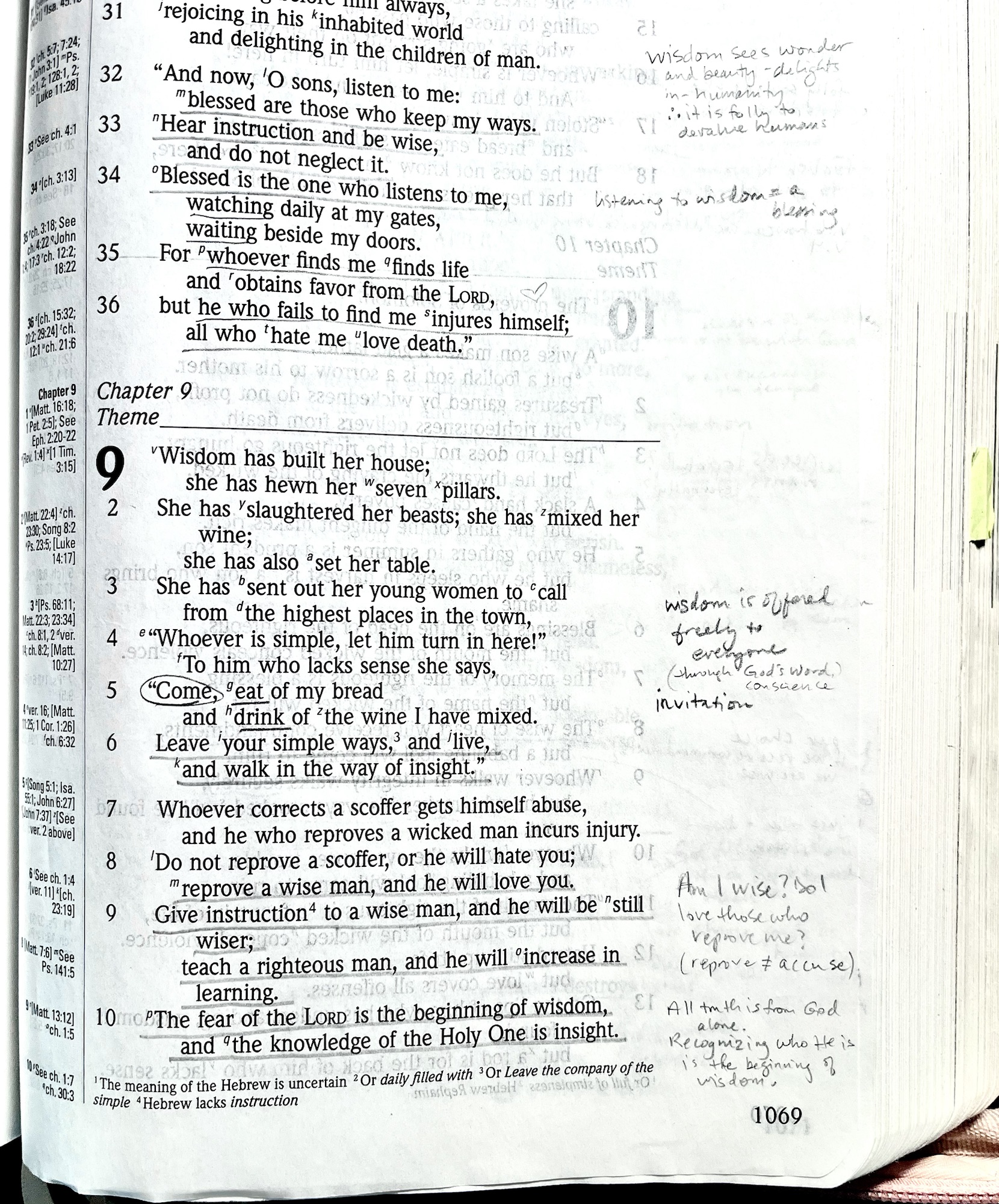
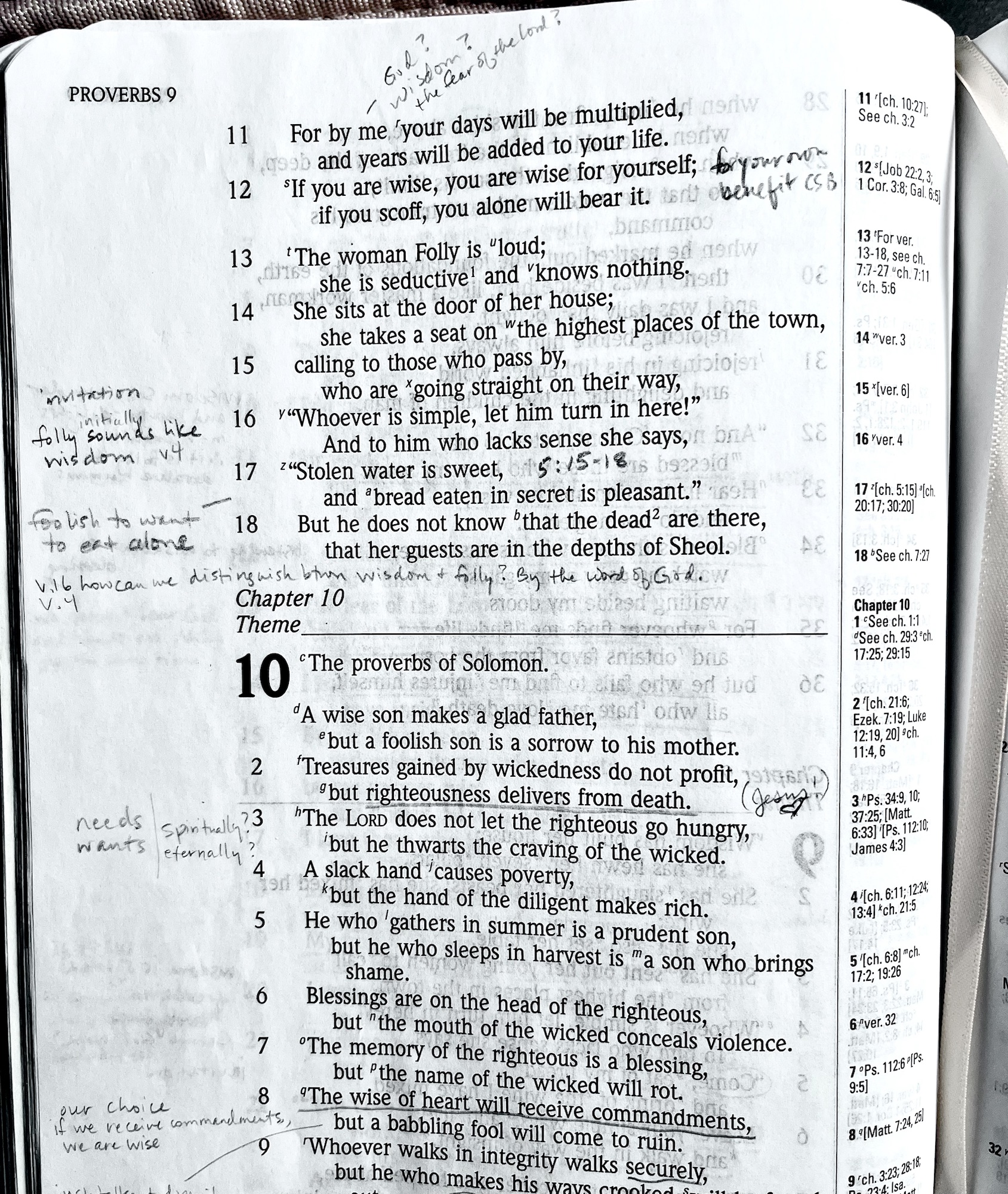
Now, I would expect that foolishness and wisdom would sound different from the start, wouldn’t you? They are at the opposite ends of a spectrum; it seems like they would be easily identifiable, easily distinguishable. But they start out saying the exact same thing. Read all of chapter 9, of course, but as you do, check out verses 4 (wisdom) and 16 (folly/foolishness). They both say,
“Whoever is simple, let him turn in here!”
Isn’t that interesting? Foolishness and wisdom initially sound exactly the same. They both say, in effect, “Do you want to be wise? I’ll tell you what you need to know!”
How can we identify wisdom?
Note that in verse 18, we see that those who have listened to Folly have died. Her way ends up being the way to death, not life; she was not offering wisdom at all, even though she claimed to be. So it’s really important that we tell the difference between wisdom and folly!
So how can we tell whether something we hear – a statement, a teaching, a viewpoint, a school of thought, a worldview – is foolish or wise? How can we distinguish folly from wisdom, if they both claim to offer wisdom for those who need it?
One: Our first step is to keep listening. What are they actually teaching? What are they inviting us to?
In the illustration God gives in Proverbs 9, Wisdom invites people to a feast she has prepared for them; she offers nourishment and insight and life (verses 5-6). Folly, on the other hand, doesn’t offer nourishment or life; instead she encourages people to want and take what’s not theirs, and she promotes seclusion and hiding away rather than enjoying provision in community (verse 17).
Two: Once we know what’s being taught, our second step is to find out whether that teaching is wise or foolish.
So how can we do that? How can we be sure whether it’s wise or foolish? God has revealed that right here in this chapter!
In verse 10, set right between these two contrasting pictures, we see that
“The fear of the LORD is the beginning of wisdom, and the knowledge of the Holy One is insight.”
Ah! Right! All wisdom comes only from God; He is the only Source of everything good. And He has shown us His wisdom – where? – in His Word.
So first, we listen to what’s being said, and then we compare everything we hear to Scripture to find out whether it’s wise or foolish. If we don’t do that work, we’ll be taken in by folly, because foolishness is deceptive and makes itself sound like wisdom (Proverbs 14:8). It can even sound caring, loving, kind, sensible, and, yes, wise to our own sensibilities. But our perceptions are not always right! We can’t depend on them to discern wisdom from folly (Proverbs 28:26). We have to look to God’s revealed wisdom to have accurate understanding (for further reading on this, see my post on Proverbs 3:5-6).
Be on your guard, friends. Folly can sound a lot like wisdom. Listen to everything you’re being taught, and compare it to God’s true wisdom, provided for us in His written Word. Choose the fear of the Lord and seek the knowledge of the Holy One. He has enabled us to recognize and avoid the path to folly and death, and He has shown us the path to wisdom and life. We simply have to humble ourselves before Him, submit ourselves to what He has revealed, and walk in His wisdom.

More wisdom from Proverbs:
 More Than This Mess